
Sydney, Australia · Griffith University

Shaping the
Moral Compass
of Autonomous AI.

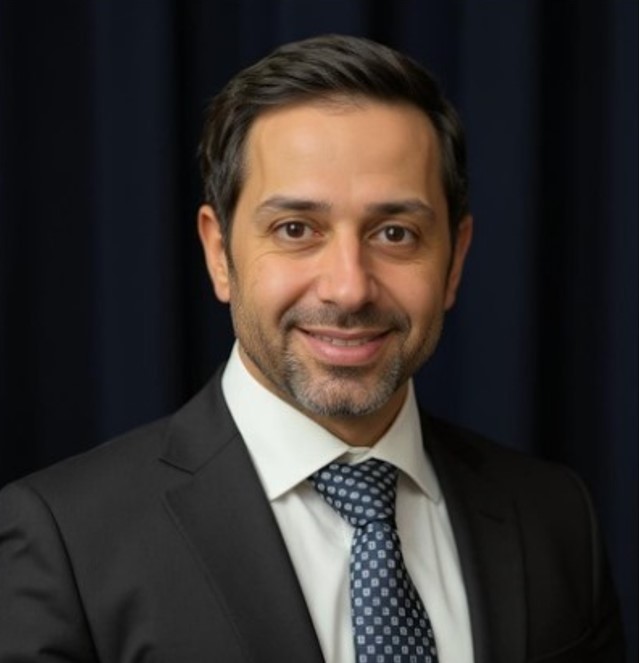
Amir is an AI ethics researcher specialising in the ethical design and governance of autonomous systems, with a particular focus on autonomous vehicles.

His work explores how ethical principles can be translated into practical decision-making frameworks, bridging the gap between theory, regulation, and real-world implementation.
PhD
Philosophy · Griffith University
5
Peer-Reviewed Pubs
8+
Google Scholar Citations
ICAART Presenter
Dr. Amir Rafiee
Dr. Amir Rafiee
Independent Researcher · AI Ethics & Governance
ICAART 2024 · 2025 · 2026
CEPE 2023
Emerald Publishing Vol. 27
Griffith University ICT · Ethics · Governance
ORCID 0000-0002-8149-4780
Research Interests

Ethics at the
Heart of AI Design.

Bridging philosophy, law, technology, and public policy to answer one critical question: How should autonomous systems make moral choices that align with Australian values?

01
Ethical Decision-Making in Autonomous Vehicles
Designing moral algorithms that balance harm minimisation, legal compliance, and public acceptability in unavoidable crash scenarios.
02
Public Perception & Social Licence
Using Australian surveys to understand what citizens expect from self-driving cars facing life-or-death ethical dilemmas.
03
AI Policy & Regulation
Critiquing and improving national frameworks — including Australia's National Transport Commission safety assurance processes.
04
Philosophical Foundations
Evaluating utilitarianism, deontology, Rawlsian justice, and hybrid approaches for machine autonomy in morally complex environments.
05
Responsible AI Design
"Ethics by Design" principles that embed transparency, accountability, and fairness into autonomous systems from inception.
06
Safety–Ethics Integration
Demonstrating that true safety assurance must include ethical criteria — not treat them as optional add-ons to technical compliance.
Publications

Peer-Reviewed Research

Five published works across leading AI ethics and philosophy conferences and journals (2023–2026), including the most recent presentation at ICAART 2026 in Marbella, Spain.

2026
Assessing Moral Frameworks for Autonomous Vehicle Decision-Making
Amir Rafiee
ICAART 2026 / Marbella, Spain — Proceedings of the 18th International Conference on Agents and Artificial Intelligence, Volume 5: ICAART, pp. 4762–4769 · DOI: 10.5220/0014490000004052
Building on the four practical principles set out in the 2025 ICAART paper (IOS, HCL, HPP, ODS), this study evaluates how leading moral frameworks — utilitarianism, deontology, virtue ethics, and contractualism — perform when applied to autonomous-vehicle decision-making. The analysis tests each framework against the same realistic dilemma scenarios used in earlier Australian survey work, scoring them against the principles citizens actually expect AVs to follow. The paper argues that no single framework provides a complete answer and proposes a layered, principle-driven approach that policymakers and manufacturers can implement without abandoning ethical pluralism.
Moral Frameworks Decision-Making ICAART 2026 SciTePress ISBN 978-989-758-796-2
2025
Ethics of Autonomous Vehicles: Australians’ Expectations and Moral Preferences
Amir Rafiee
ICAART 2025 — Proceedings of the 17th International Conference on Agents and Artificial Intelligence, pp. 287–297 · DOI: 10.5220/0013123900003890
This landmark study surveyed Australians on six realistic ethical dilemma scenarios for personal autonomous vehicles. By excluding discriminatory factors (age, gender, etc.) and incorporating legal context, the research produced four clear, actionable principles: Injury Over Sacrifice (IOS) — preferring injury over death where a choice exists; Harm Confinement and Lawfulness (HCL) — confining harm to those who broke the rules; Harm Prevention and Prioritisation (HPP) — avoiding actively causing death when possible; and Objective Decision System (ODS) — using random selection when multiple justified outcomes exist. The findings shift AV ethics away from pure utilitarianism toward a deontological, rule-based framework with built-in moral safeguards that policymakers and manufacturers can implement immediately.
IOS Principle HCL Principle HPP Principle ODS Principle Open Access PDF
2024
Government’s Response to Ethical Dilemmas in Autonomous Vehicle Accidents: An Australian Policy Evaluation
Amir Rafiee, Hugh Breakey, Yong Wu & Abdul Sattar
ICAART 2024 — Proceedings of the 16th International Conference on Agents and Artificial Intelligence, pp. 1152–1161 · DOI: 10.5220/0012451200003636
A detailed critique of Australia's National Transport Commission 2018 Decision Regulation Impact Statement, which assessed safety assurance for Automated Driving Systems but explicitly excluded ethical considerations. The paper argues that safety and ethics are inseparable — you cannot claim a system is "safe" if it makes morally unacceptable choices in unavoidable crashes. The authors demonstrate how current safety criteria (Safe System Design, Operational Design Domain, Minimal Risk Condition) fail in ethical dilemmas, critique the reliance on the "Swedish solution," and recommend mandatory inclusion of ethical criteria in future regulation, public education campaigns, and transparent stakeholder dialogue.
Policy Analysis NTC DRIS Critique AV Regulation Australian Policy
2023
People’s Perception and Expectation of Moral Settings in Autonomous Vehicles: An Australian Case
Amir Rafiee, Hugh Breakey, Yong Wu & Abdul Sattar
CEPE 2023 — International Conference on Computer Ethics · Griffith Repository: Full PDF available
The first Australian survey on AV moral programming — revealing what citizens expect before widespread deployment and highlighting the significant gap between theoretical ethics and real Australian values. This ground-breaking public-perception data directly informed the practical principles developed in the 2025 ICAART paper. The study establishes a baseline for understanding social licence for autonomous vehicle deployment in the Australian context.
Australian Survey Social Licence Public Perception CEPE 2023
2023
Philosophical and Legal Approach to Moral Settings in Autonomous Vehicles: An Evaluation
Amir Rafiee, Yong Wu & Abdul Sattar
Social Licence and Ethical Practice, Vol. 27, pp. 95–114 · Emerald Publishing · Cited by 8
A comprehensive philosophical and legal evaluation comparing utilitarianism, deontological ethics, and Rawlsian justice as frameworks for programming self-driving car decision-making. The paper evaluates the real-world strengths and limitations of each approach for legal and policy application, providing a rigorous theoretical foundation for the empirical survey work that followed. Published by Emerald Publishing with 8 citations — the most-cited work in the series.
Emerald Publishing Utilitarianism Deontology Rawlsian Justice 8 Citations
📚 PhD Thesis Spotlight
"Ethics by Design: Shaping the Moral Compass of Autonomous Vehicles in Australia"
🔬Philosophical Analysis of Moral Frameworks
📊Australian Public Survey Research
⚖️National Policy Evaluation & Critique
🏗️Practical Framework for Industry & Regulators
🇦🇺Australia-First Regulatory Roadmap
Completed 2020–2024

"The best AI is not the smartest — it's the one that reflects our shared humanity."

This thesis developed a comprehensive Australian framework for embedding ethics into autonomous vehicle design from day one. Combining rigorous philosophical analysis, public perception surveys, and policy evaluation, it offers regulators and industry a practical roadmap to create vehicles that are not only intelligent but also morally responsible.

Supervised by Prof. Abdul Sattar (School of Information and Communication Technology) and Dr. Hugh Breakey (Institute for Ethics, Governance and Law), the research was conducted at Griffith University.

DegreePhD, Philosophy (interdisciplinary ICT)
InstitutionGriffith University, Australia
SupervisorsProf. Abdul Sattar & Dr. Hugh Breakey
Graduated2025
Policy Principles

Four Principles for Australian AV Ethics

Derived from Australian survey data and philosophical analysis — ready for implementation in national regulation and manufacturer design codes today.

IOS
Injury Over Sacrifice
Prefer injuring rather than killing when a choice exists — minimising fatalities while respecting the duty not to actively kill.
HCL
Harm Confinement & Lawfulness
Confine harm to those who broke the rules (e.g., jaywalkers), even when this means saving fewer lives overall.
HPP
Harm Prevention & Prioritisation
Avoid actively causing death when possible — passive outcomes are preferred over active harm, reflecting deontological values.
ODS
Objective Decision System
When multiple justified outcomes exist, random selection provides fairness, transparency, and simplicity — especially for early AV deployment.

Policy Recommendations

  • Integrate IOS, HCL, HPP and ODS into Australia's national AV safety standards
  • Make ethical criteria mandatory in all future Decision Regulation Impact Statements
  • Launch public education campaigns explaining how AVs will handle dilemmas
  • Pilot transparent "ethical black-box" logging so Australians understand post-incident decisions
  • Establish mandatory stakeholder dialogue between ethicists, manufacturers and regulators
  • Develop SSEG-equivalent ethical compliance certification for AV approval processes
Collaboration

Ready to Build
Ethical AI Together?

"Ready to collaborate on responsible AI? Let's talk about building ethical autonomous systems that Australians can trust." — Amir Rafiee, PhD